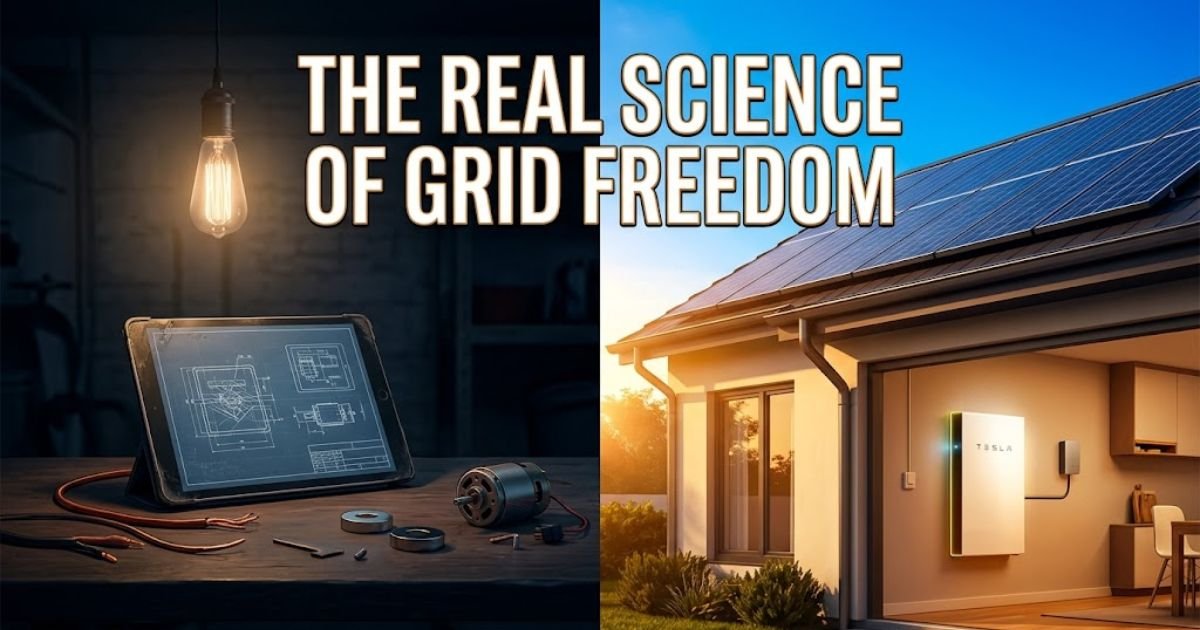
Evaluating the Energy Revolution System vs Solar Panels requires looking past marketing hype. There is an almost undeniable pull to the idea of pulling your home entirely off the electrical grid. When power rates climb quarter after quarter, extreme weather rolls through, and utility companies send out rolling blackout warnings, taking control of your own energy supply doesn’t just sound smart—it feels urgent. Energy Revolution System vs. Solar Panels.
In that search for self-reliance, you inevitably hit a fork in the road. On one side stands certified residential solar storage: an undeniable engineering feat that carries an eye-watering upfront price tag of $15,000 to $25,000. On the other side sits a compelling digital manual like the Energy Revolution System, promising complete grid independence for a crisp $39 bill and a quick trip to the hardware store.
Before you invest your money—or worse, rely on a manual to keep your food cold during a multi-day winter outage—it pays to strip away the marketing fog and compare these paths through the lens of verified physics, electrical safety codes, and real-world performance.
Energy Revolution System vs Solar Panels: Full Comparison
1.1 Understanding the $39 Digital Manual: What Do You Actually Receive?
Clicking the purchase button on the Energy Revolution System doesn’t ship a crate to your front porch. You won’t be unboxing solar panels, heavy-duty copper wiring, or a sleek battery enclosure.
Instead, your $39 unlocks a downloadable PDF manual paired with a handful of instructional videos. The guide details how to build a tiny, desktop-sized electromagnetic device using parts sourced from local supply stores or hobby shops.
- The Delivered Format: A digital PDF download accompanied by basic video walkthroughs.
- The Assembly Blueprint: Instructions to wire a small DC motor, arrange neodymium magnets, hand-wind copper coils, and set up a basic voltage regulator on a wood frame.
- Out-of-Pocket Part Costs: Expect to spend an additional $100 to $250 on raw materials, assuming you already own basic workbench tools.
- The Pitch vs. Reality: The manual frames this setup as a engine capable of tapping into “ambient energy loops.” In practice, you are building a standard high-school-level science project demonstrating magnetic induction.
Clicking the purchase button on the Energy Revolution System doesn’t ship a crate to your front porch. You won’t be unboxing solar panels…
1.2 Electromagnetic Induction vs. Photovoltaic Generation: The Physics Gap
To understand why a benchtop magnet assembly cannot run your home, you have to look at how electricity is actually harvested at scale:
[ Photovoltaic (PV) Generation ]
Solar Radiation (Photons) ──> Silicon Wafer Semiconductors ──> Direct Current (DC) ──> Inverter ──> Household AC Power

[ Electromagnetic Induction (DIY Benchtop Setup) ]
Mechanical/Magnetic Flux ──> Copper Coil Displacement ──> Minor DC Output (Requires Continuous Physical Input)
Rooftop solar operates on the photoelectric effect. When sunlight strikes silicon wafers inside a panel, photons knock electrons free, creating a steady stream of direct current. It turns free, abundant solar radiation into electricity with no moving parts.
The Energy Revolution System relies on Faraday’s Law of Induction—inducing electric current by moving magnetic fields past conductive copper coils. While this principle powers massive hydroelectric dams and commercial wind turbines, those systems require immense physical kinetic energy (falling water or rushing wind) to turn massive generators continuously.
This brings us to an unyielding law of nature: The First Law of Thermodynamics. Energy cannot be created out of nothing; it can only change forms. A tiny homemade magnetic assembly cannot generate more electrical energy than the physical work put into moving it. Claims that magnetic feedback loops create self-sustaining power loops cross out of real physics and into the realm of perpetual motion myths.
1.3 Deconstructing the “Buried Tesla Blueprint” Marketing Narrative
If the physics don’t add up, why are these manuals so popular? They lean heavily on a narrative strategy built around historic lore—specifically, the genius of Nikola Tesla.
Sales pages often reference Tesla’s early 20th-century wireless power experiments, claiming energy executives suppressed his “free energy” patents to safeguard corporate power monopolies. While Tesla did construct Wardenclyffe Tower to explore global energy transmission through the atmosphere, the project stalled due to inverse-square radiation losses and a loss of financial backing. It wasn’t a hidden blueprint for a household power hack. Modern sales pages repurpose that history to create a feeling of insider access, making a simple DIY project feel like a secret breakthrough.
Head-to-Head Comparison: DIY Electromagnetic System vs. Solar + Battery Storage
2.1 Power Output & Capability Matrix
When looking at Energy Revolution System vs Solar Panels, power output is the most critical metric
| Feature / Metric | Energy Revolution System (DIY Manual) | Certified Solar + Battery Storage System |
| Primary Energy Source | Hand-assembled DC magnet setup | Sunlight (PV) + Lithium Iron Phosphate (LFP) Storage |
| Continuous Power Output | 5W – 50W max (experimental output) | 3,000W – 10,000W+ continuous output |
| Surge Capacity (Peak Load) | Negligible (<75W peak) | 7,000W – 15,000W (starts high-draw motors) |
| System Grid Connection | Isolated, single-device testing only | Automatic Transfer Switch (ATS) Grid-tied/Off-grid |
| Safety Certifications | None (Exposed wiring, custom build) | UL 1741, UL 9540, Full NEC Compliance |
| Insurance & Permitting | Can void home insurance if connected | Fully permitted, utility net-metering compliant |
| Real Cost Investment | $39 (Guide) + ~$150 (Components) | $12,000 – $25,000 (Before tax incentives) |
2.2 Whole-Home Backup Realities: Refrigerators, HVAC, & Medical Devices
When the power grid drops out on a hot summer afternoon, your home demands severe amounts of starting power—often called “inrush current”—just to turn appliances on:
- Kitchen Refrigerator: Needs 100W–200W while running, but demands a massive 1,200W surge to kickstart the compressor motor.
- Central Air Conditioner (3-Ton): Draws 3,000W–5,000W continuously, with startup surges sweeping past 15,000W.
- CPAP Medical Devices: Require 30W–90W of clean, steady power through the night.
When evaluating the Energy Revolution System vs Solar Panels, startup surge capacity is the real test for heavy appliances.
A benchtop generator producing 10 to 50 watts simply does not have the push required to start a compressor. At maximum capability, a hand-built coil assembly might light a couple of low-voltage LED diodes or trickle-charge a smartphone over several hours.
In contrast, a certified rooftop solar array matched with a residential battery bank—such as a Tesla Powerwall or Enphase IQ setup—delivers clean sine-wave power. It automatically detects a grid collapse and keeps high-draw appliances running without interruption.
[ Peak Surge & Continuous Capacity Comparison ]

Solar + Battery Storage  [||||||||||||||||||||||||||||||||||||||||] 10,000W+ (Runs HVAC, Refrigeration, Whole Home)
DIY Magnetic Generator   [||] 50W Max (Powers single LED light or slow-charges a phone)
3.3 Upfront Investment vs. Long-Term Return: Financial Breakdown
The low cost of a $39 digital guide is tempting, but its true financial return on investment stays grounded near zero because it cannot reduce your utility usage.
The financial disparity in the Energy Revolution System vs Solar Panels comparison comes down to immediate cost versus lifetime energy production.
- The DIY Experiment Route:
- Initial Spend: $39 (Guide) + $150 (Materials) = $189 Total
- Monthly Bill Savings: Less than $0.10/month (charging low-draw USB devices)
- Payback Period: Beyond a lifetime
- The Residential Solar + Battery Route:
- Initial Spend: $20,000 (Gross) – $6,000 (30% Federal Investment Tax Credit) = $14,000 Net
- Monthly Bill Savings: $150–$300/month through reduced grid pull and net metering
- Payback Period: 6 to 9 Years
- Operational Lifetime: 25 to 30 Years of warranted output
2.4 Installation Safety, NEC Compliance, and Home Insurance Risks
Trying to bridge a DIY benchtop project into your home breaker panel introduces serious property and safety hazards:
                  ┌──> Uncertified DIY Build ──> Thermal Shock / Fire ──> Denied Insurance Claims
HAZARDOUS SETUP  ─┤
                  └──> Manual Grid Backfeeding ──> Electrocution Risk to Line Workers

                  ┌──> UL 1741 Inverter ────────> Clean Sine Wave Power ─> Protects Appliances
CERTIFIED SOLAR  ─┤
                  └──> Automatic Transfer Switch ─> Physical Grid Separation ──> Insured & Code Compliant
- Fire Hazards: Custom-built generators lack thermal cutoffs, overload protection, and certified enclosures. Exposed magnet wire running continuous loads creates immediate short-circuit risks.
- Backfeeding Dangers: Hooking an uncertified power source directly into your wall outlets can force electricity backward into municipal power lines, posing life-threatening electrocution hazards to utility crews working to restore the grid.
- Insurance Liability: Standard home insurance policies strictly exclude coverage for fires or electrical damage caused by unpermitted, non-UL-listed DIY equipment connected to household wiring. Comparing the long-term ROI of the Energy Revolution System vs Solar Panels shows a stark contrast
3. The Verdict: When (and If) Either Option Makes Sense
Making a final decision on the Energy Revolution System vs Solar Panels depends entirely on your risk tolerance and power goals.
                                  [ What is your main objective? ]
                                                 │
                        ┌────────────────────────┴────────────────────────┐
                        ▼                                                 ▼
          [ Educational / STEM Curiosity ]                    [ Reliable Emergency Backup ]
                        │                                                 │
                        ▼                                                 ▼
       [ DIY Science Kits / Small Ebooks ]              [ Certified Solar + Battery Storage ]
       • Cost: Under $200                                • Cost: $10,000+
       • Focus: Hands-on learning                        • Focus: Full outage coverage
       • Output: Low DC micro-power                      • Output: Whole-home AC grid power
3.1 Who Should Consider DIY Educational Energy Kits?
Small-scale electromagnetic build guides make sense for:
- Hobbyists, students, and tinkers who enjoy hands-on STEM experiments to see Faraday’s principles work up close.
- Makers interested in understanding motor construction, coil winding, and low-voltage current generation.
- Keep in mind: Treat these guides strictly as learning tools, not as functional home backup systems.
3.2 Who Requires Certified Residential Solar Backup?
Full-scale residential solar and battery storage is essential for homeowners who:
- Need uninterrupted power for essential appliances, food preservation, well pumps, or critical medical equipment during multi-day outages.
- Want to reduce long-term electric bills through net metering and daily power management.
- Value building real equity in their property using safe, certified hardware protected by 25-year manufacturer warranties.
3.3 Red Flags in Off-Grid Energy Marketing: How to Spot Hyped Claims
Protect your wallet when evaluating alternative energy claims online by watching for these consistent warning signs:
- “Free Energy” Promises: Any product claiming to generate infinite energy without consuming a clear fuel source (like sunlight, wind, or fuel) contradicts basic physical laws.
- Stories of Hidden Corporate Suppression: Narratives built around secret patents kept hidden from the public are common sales techniques meant to bypass critical evaluation.
- Missing Wattage Specifications: Genuine power hardware clearly rates its performance in Watts, Kilowatt-hours, or Continuous Amperes. Be cautious of systems that promise to “power your home” without listing actual power capacities.
- Digital Downloads Sold as Hardware: If a product promises to replace a commercial home generator for under $100 but delivers only a PDF file, you are purchasing a project guide, not a working power solution.
Reader Questions & Reality Checks
Will the Energy Revolution System keep my fridge running when the power goes out?
No. The system built from the manual produces micro-power (typically under 50 watts of direct current). A home refrigerator needs up to 1,200 watts of surge capacity just to kick on its compressor. It simply won’t run household appliances.
Is ambient electromagnetic energy something I can actually capture?
Ambient energy exists everywhere around us in the form of sunlight, wind currents, and radio waves. However, gathering enough of it to run a home requires significant equipment, such as a rooftop solar array or wind turbine. A small tabletop magnetic coil setup cannot pull continuous, heavy electrical loads out of thin air.
What does it take to actually run essential home appliances during a blackout?
To keep essentials like a refrigerator, lights, internet router, and well pump running during an outage, you generally need a 3kW to 5kW solar panel array linked to a 5kWh to 10kWh lithium storage battery and a code-compliant transfer switch installed by a licensed electrician.
Products, Tools & Resources
If you are exploring off-grid power, energy independence, or emergency preparedness, these verified tools, components, and resources provide real utility:
- System Sizing & Solar Calculators:
- PVWatts Calculator (NREL): An official tool by the National Renewable Energy Laboratory to estimate energy production and cost offsets for rooftop solar based on your exact address.
- Appliance Energy Load Calculator (Department of Energy): Helps calculate your total continuous and surge wattage needs before buying emergency backup hardware.
- Portable Power Stations & Solar Generators (Plug-and-Play Backup):
- EcoFlow Delta Pro / Anker Solix F3800: Portable, high-capacity LFP battery generators capable of supplying 120V/240V output for refrigerators and critical home circuits without permanent installation.
- Jackery Solar Generator 2000 Plus: Expansion-ready modular battery setup paired with portable solar panels, ideal for emergency backup and partial off-grid needs.
- Certified Whole-Home Solar & Battery Ecosystems:
- Enphase IQ Battery 5P: High-reliability LFP microinverter-based battery storage designed for whole-home backup and seamless grid isolation.
- Tesla Powerwall 3: Fully integrated solar inverter and battery system built for whole-home surge loads, time-of-use management, and grid outage protection.
- Hands-On Educational Physics & Electronics Kits:
- Elenco Snap Circuits Green Energy Kit: A safe, accessible way for students and hobbyists to explore clean energy generation, solar cells, and electromagnetic concepts without working with dangerous line voltages.
- Energy Revolution System Guide: A digital instructional PDF manual for hobbyists looking to explore basic magnetic induction and DIY energy concepts at home.
- RENEWABLE ENERGY EXPERIMENTS Lab Manuals (Wiley/IEEE): University-level laboratory manuals for makers who want to understand true photovoltaic and magnetic power conversion science.