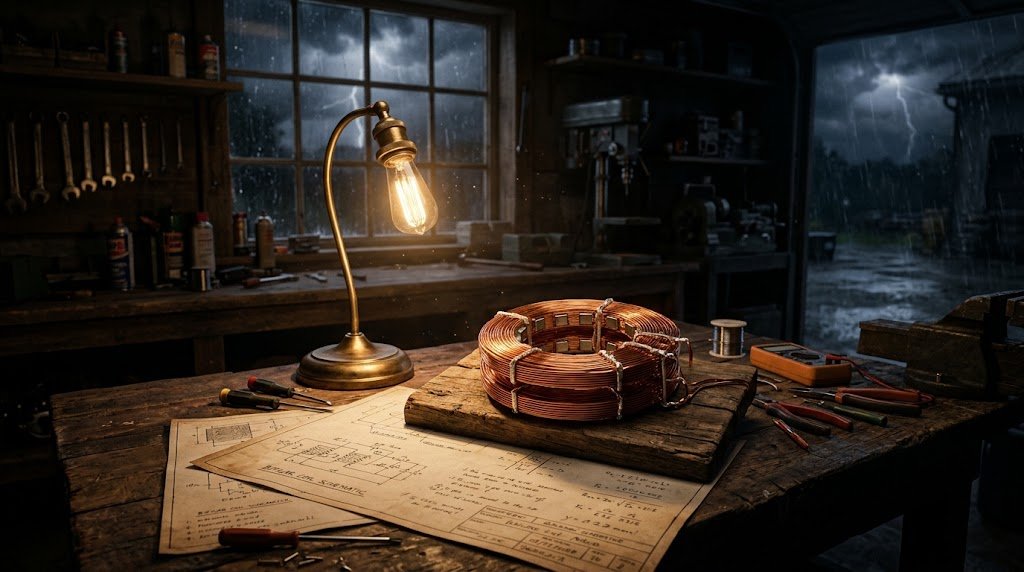
Energy Revolution System: Complete Review of the DIY Power Generator and Its Claims examines a digital guide that says it can help beginners build a compact generator using coils, wire, and magnets. It offers construction instructions, but the central question is whether the device can deliver useful, measurable power, not whether its design sounds inventive.
Key Takeaways
- It is a digital guide, not a finished generator. The offer is described as blueprints and instructions for a DIY build.
- The described design uses a Bifilar Pancake Coil. A coil can take part in electromagnetic energy conversion, but it cannot create energy by itself.
- Output claims need load testing. A voltage reading or a glowing LED does not establish that a device can supply sustained power to household equipment.
- Budget for the build as well as the guide. Components, tools, shipping, and replacement parts all affect value.
- Independent, repeatable test results matter. Useful evidence reports the input source, measured input and output, load, and operating time.
- For dependable backup power, compare established options. Solar with battery storage, a portable power station, or a properly installed generator can be sized around specific needs.
What the Energy Revolution System Is
The Energy Revolution System guide is presented as a digital blueprint for building a compact home generator. Its described design is a Bifilar Pancake Coil generator, assembled from components such as wire, magnets, and coils.
That makes it a project guide, not a generator that arrives ready to plug in. You would need to obtain the components, build the device, and test what it can actually power.
The offer is aimed chiefly at beginners interested in DIY electronics, supplemental power, or learning about coils and electromagnetic principles. Interest in off-grid living may draw readers to it, but a small experimental build should not be confused with a proven replacement for household electricity.
What the Guide Says It Includes
The guide includes step-by-step instructions, blueprints, parts lists, safety guidance, maintenance information, scaling options, and explanations of electromagnetic principles.
Those features could help a first-time builder follow a project. The practical value depends on whether the instructions are clear enough to identify component specifications, wiring connections, and safe test procedures.
The guide’s stated design and contents do not establish the finished device’s output.
How the Coil Design Relates to Basic Physics
A bifilar coil has two strands of wire wound together or in a paired arrangement. Coils can be used in electromagnetic induction, where a changing magnetic field induces voltage in a conductor; a Tesla coil is a resonant transformer design that uses changing electrical fields and resonance.
These established principles explain how electrical devices can transfer or convert energy. They do not show that a particular coil will produce high output, run continuously, or generate more energy than its input.
A generator requires an energy source. Depending on the design, that may be mechanical motion, a battery, or another input; the source must be identified and measured. A closed-loop circuit can circulate current while energy is supplied, but it cannot keep powering itself without an input, and real components also lose energy as heat and through electrical resistance.
Terms such as magnetic resonance or Tesla-inspired may describe design ideas, but they are not performance measurements. To assess an amplified-output claim, measure the energy entering the complete device and the usable energy leaving it over the same test period.
This coil-winding reference comes from a separate DIY electricity resource. It is not a verified Energy Revolution System specification.
Source: The Open University, OpenLearn
Did You Know?
The number of turns is not critical, but 1 500 should do.
Source: The Open University, OpenLearn
How to Test Real Output and Household Savings
Begin by defining the input source and the intended load. Record input voltage and current while the device is operating, then measure output voltage and current at the load; for changing values, use instruments that can record or calculate power over time rather than relying on a single display reading.
Electrical power is measured in watts, and energy delivered over time is measured in watt-hours. A useful test records the load, the device’s output under that load, and how long it maintains that output, while also accounting for energy used by any battery, motor, or other input source.
For a fair comparison, use a stable, clearly specified load and repeat the test. A brief voltage reading, an unloaded output, or an LED lighting up does not prove that the generator can run a router, refrigerator, or other appliance for a useful period.
Estimate possible savings from measured usable energy, not a claimed voltage or theoretical maximum. Multiply the kilowatt-hours actually delivered by the electricity rate you pay, then subtract the guide cost, components, tools, shipping, maintenance, and replacement parts; if the result is small or negative, the build is not paying for itself as a bill-saving investment.
Build Effort, Safety, and Buying Considerations
A DIY coil project can involve measuring and cutting wire, winding coils consistently, making secure electrical connections, and checking continuity and insulation. A basic multimeter is useful for checking voltage and continuity; builders also need suitable tools for the specified connections and enough electrical knowledge to recognize a short circuit, overheating, or an unsafe battery setup.
Follow a verified circuit diagram, insulate exposed conductors, keep conductive debris away from connections, and stop testing if components heat unexpectedly. Batteries can deliver high currents into a short circuit, so use appropriate protection and follow the battery maker’s handling and charging instructions.
The U.S. Fire Administration reports that in 2021, an estimated 24,200 residential building electrical fires were reported to United States fire departments. That figure is a reminder to take electrical precautions seriously, not a measure of this product’s specific risk.
Do not connect an unapproved DIY device to household wiring or the utility grid. Improper connections can create shock and fire hazards, and can send power back onto lines thought to be de-energized; grid-connected equipment requires appropriate approved equipment and qualified installation.
Before buying a digital guide, read the checkout terms for the refund window, eligibility rules, delivery method, and any recurring charges or optional upsells.
Claims, Evidence, and Value for Money
The system is presented as portable and intended for supplemental power, but those aims do not establish its output; useful performance requires independent, reproducible testing.
That distinction matters. A persuasive performance report should show the exact input source, measured input power, output power, load type, operating duration, instrument method, and repeat results. Promotional testimonials can describe a person’s experience, but without those details they cannot establish energy efficiency or prove that a device will meet another household’s needs.
The offer’s value cannot be judged from the guide alone. Add up the guide price and every build cost, then compare that total with the measured electricity the finished device can deliver; do not count projected savings until the output has been tested under a realistic load.
For readers considering the Energy Revolution System Review – Should You Buy It or Skip It?, the useful distinction is between educational value and dependable power value. The guide may interest someone who wants a hands-on electronics project, while a household relying on it for essential backup needs evidence of sustained output first.
Did You Know?
The region had almost 400,000 distributed solar power installations as of December 2024 with a combined nameplate generating capability of approximately 7,500 MW.
Source: ISO New England
Practical Alternatives for Backup Power
Choose an alternative by listing the devices you need to keep running, their power draw, and how long they must operate. This prevents buying or building around an attractive headline rather than a real energy requirement.
- Portable power station: A battery-based option can suit phones, lights, small electronics, and selected appliances if its output rating and stored energy match the load.
- Solar panels with battery storage: A practical route for replenishing stored energy, provided the system is sized for local sunlight, charging needs, and the intended devices.
- Fuel-powered generator: Can serve higher-power backup needs when selected and operated according to its safety instructions, with proper outdoor placement and ventilation.
- Grid-connected solar: A household option for reducing purchased electricity, designed around the home’s needs and installed with suitable equipment and qualified professionals.
Each option has costs and limits. For emergency planning, a tested system with known output and a clear operating procedure is more dependable than assuming a small DIY coil will supply household power.
Frequently Asked Questions
Can the Energy Revolution System run a refrigerator during an outage?
A refrigerator’s compressor may draw more power when it starts than while it is running, so a steady low-load test is not enough to establish suitability. Measure the refrigerator’s starting and running needs, then compare them with the generator’s verified output and operating duration.
Can I use the DIY generator to charge a phone or power station?
Only if its output is stable and compatible with the device’s charging requirements. Charging electronics typically requires regulated voltage and appropriate current limits, so an improvised coil output should not be connected directly without suitable power conditioning.
What should a credible independent test report include?
Look for a defined circuit and input source, calibrated measurement equipment, a stated load, and simultaneous input and output readings over a meaningful run. A report should also make its method repeatable so another builder can check the result.
Is a digital blueprint useful if I have never built an electrical project?
It can be a learning resource if its diagrams and safety instructions are clear and you are comfortable working carefully with basic tools. Start with low-voltage practice projects and do not attempt grid connections or unfamiliar battery systems as a first build.
How should I plan backup power for medical equipment?
Use equipment with documented output and runtime that match the medical device’s requirements, and plan for charging or fuel interruptions. Confirm the backup arrangement with the equipment provider or a qualified electrician rather than relying on an experimental generator.
Conclusion: Is the Energy Revolution System Worth It?
Energy Revolution System: Complete Review of the DIY Power Generator and Its Claims finds a digital construction guide described as covering a Bifilar Pancake Coil generator, parts, assembly, and troubleshooting. Those materials may appeal to an electronics hobbyist, but design terminology and promotional claims are not substitutes for independently measured output.
For a learning project, weigh the guide and build costs against the educational experience and proceed with careful electrical safety. For bill savings or essential backup power, choose a solution with documented performance and size it to the loads you actually need; do not expect an unverified DIY generator to eliminate electricity bills or replace grid power.