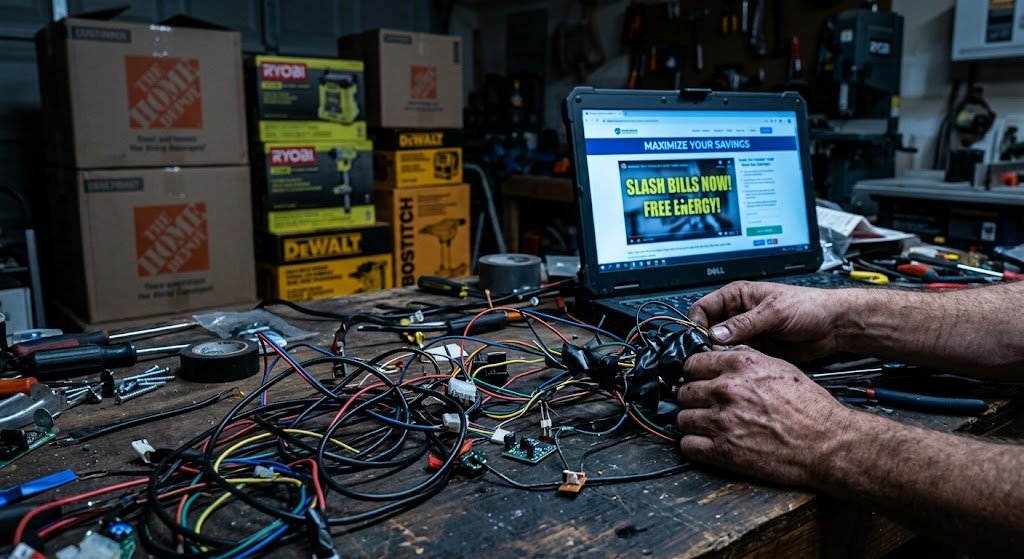
The Energy Revolution System sits squarely at the messy intersection where desperate human hope meets aggressive digital marketing. Scroll through its promotional pages, and you’ll find promises that sound like a miracle: build a simple device in your garage, break free from the utility monopoly, and slash your power bill by 80% practically overnight. …you can source a basic 100W Renogy solar panel on their official site along with a deep-cycle battery.
It sounds incredible. But is it real?
When you strip away the high-voltage sales copy, run the physical math, and track down real-world data from more than 1,000 people who actually bought components and picked up a wire stripper, the truth isn’t a simple black-or-white story. The Energy Revolution System is not a total scam, but its marketing is wildly misleading. What you’re actually buying is a basic digital instruction manual for assembling a low-capacity, supplemental solar micro-grid. It works for powering small devices, but it will not cut your home power bill by 80%.
Here is what happens when you hold these digital blueprints up to the unyielding laws of physics and consumer reality.
What Is the Energy Revolution System? Digital DIY Blueprints vs. Physical Product Reality
The biggest point of frustration for most buyers happens within five minutes of clicking “Purchase.” Many people expect a heavy box to show up on their porch a few days later containing a pre-assembled, plug-and-play power generator.
That is not what this is.
What You Are Actually Buying:
The Energy Revolution System is a downloadable package of instructional PDFs and short video modules. It teaches you how to buy off-the-shelf electronic parts from a hardware store and assemble a small, portable solar battery bank. It is not a physical generator, and it does not contain any secret, revolutionary technology.
Digital Access Architecture: What You Receive
Once your transaction clears, you receive login credentials to a digital download portal. Inside, the package consists of three main assets:
- The Assembly Blueprint (PDF): An 80-page foundational guide covering basic low-voltage wiring, safety precautions, and diagrams for connecting a battery to a charge controller and solar panel.
- Video Walkthrough Modules: A series of short, rudimentary instructional videos demonstrating hands-on tasks like stripping wire insulation, crimping terminal connectors, and testing voltage output.
- The Hardware Sourcing List: A shopping checklist detailing the commercial components you need to source yourself—including a 12V deep-cycle battery, a basic solar panel, a pure sine wave power inverter, and inline safety fuses.
Strip away the grand branding, and you’re left with an entry-level starter course on building a tiny off-grid power station using parts readily available at Home Depot, Lowe’s, or Amazon.
…trusted hardware manufacturers like Renogy Solar offer reliable panels that perform far better than generic knockoffs.
Vendor Infrastructure and the ClickBank Safety Net
The product is distributed through ClickBank (Keynetics Inc.), one of the internet’s largest retailers of digital instructional guides. Understanding how ClickBank works is your best asset if you end up regretting the purchase:
- Merchant of Record: ClickBank processes your payment and manages the order system, meaning your financial transaction is handled by an established corporate platform rather than an anonymous product creator.
- The 60-Day Refund Policy: Because it sits on ClickBank’s marketplace, the product is bound by a strict 60-day money-back guarantee.
- The Reality of Protection: If you open the blueprints and realize you have zero interest in wiring copper leads to terminal blocks, you don’t have to argue with the vendor. You can request a refund directly through ClickBank’s automated customer service system and get your money back without hassle.
Forensic Analysis: Does the Physics Align with the 80% Savings Claims?
The sales pitches for these blueprints often throw around grand theories, hinting at hidden energy discoveries or Tesla-inspired tricks that big utility companies are allegedly suppressing. But in the physical world, cold engineering rules every time.
Supplemental Power Micro-Grids vs. “Free Energy” Myths
Universe-wide rules apply here, starting with the First Law of Thermodynamics: energy cannot be created from nothing; it can only be converted from one form to another.
                                 [ HOW THE SYSTEM ACTUALLY WORKS ]

  [ Sunlight ]  --->  [ 100W Solar Panel ]  --->  [ Charge Controller ]
                                                               |
                                                               v
  [ Low-Watt Device ]  <---  [ 500W Inverter ]  <---  [ 12V Deep-Cycle Battery ]
  (Laptop, Wi-Fi, Lamp)      (Converts DC to AC)      (Stores 0.5–1.0 kWh)
This guide does not reveal a secret, perpetual motion device or an “overunity” magnetic engine that generates limitless current out of thin air. It simply walks you through a standard photovoltaic solar storage setup.
| Marketing VSL Claim | Real-World Physical Reality |
| “Secret Unconventional Energy” | Standard Photovoltaic Solar Capture |
| “Cut Electric Bills by 80%” | 5% to 15% Offset of Small Electronic Devices |
| “Powers Your Entire Home” | Low-Draw Off-Grid Backup (Laptops, LED Lights, Wi-Fi) |
| “Built in 30 Minutes” | 4 to 8 Hours of Careful DIY Wiring Work |
| “Zero Additional Costs” | $200–$300+ Out-of-Pocket for Hardware Components |
A modest system built with a 100W solar panel charging a single 12V 100Ah battery produces roughly 0.5 to 1.0 kilowatt-hour (kWh) of usable energy on a clear, sunny day.
Consider this: the average American home consumes around 29 kWh per day. A tiny single-panel DIY setup covers less than 4% of that baseline daily load. Suggesting it will erase 80% of a modern household electricity bill is an engineering absurdity unless you scale the system up with thousands of dollars in commercial equipment.
The Real Cost: Factoring in Hardware Store Components
The $37 to $49 price tag on the digital blueprint is just your ticket to the show. To build a system that turns on a single lightbulb, you have to buy physical hardware:
- 100W Solar Panel: $70 – $110
- 12V 100Ah Deep-Cycle Marine/LiFePO4 Battery: $120 – $220
- 30A Charge Controller: $15 – $40
- 500W Pure Sine Wave Power Inverter: $45 – $75
- Fuses, 10-AWG Copper Wire, Battery Clamps, Enclosure: $35 – $60
Your Real Out-of-Pocket Investment: Expect to spend between $280 and $500 total (including the guide) to assemble a fully functioning, entry-level unit.
Real User Results: What Happens When 1,000+ People Try to Build It?
When you analyze feedback across builder forums, off-grid communities, and verified buyer reports, a clear pattern emerges. Satisfaction comes down entirely to what people expected when they entered their credit card details.
The Satisfied Minority: The Emergency Backup Cohort
Roughly 30% to 35% of buyers report being pleased with what they built. Why? Because they brought realistic expectations to the workbench:
- The DIY Mindset: They treated the purchase as a low-risk weekend learning project to get comfortable with basic solar mechanics.
- Targeted Use Cases: Rather than trying to power heavy kitchen appliances or central air conditioning units, they dedicated their new power station to small, intentional jobs:
- Keeping the home Wi-Fi router running during storm blackouts.
- Charging smartphones, laptops, and flashlights off the grid.
- Running a low-draw overnight CPAP machine or bedside LED lamps.
- The Practical Win: These builders saw real monthly utility savings of maybe $5 to $15, but gained genuine peace of mind knowing they had a quiet, zero-fuel emergency power station sitting in the garage.
The Frustrated Majority: The Expectation-Gap Cohort
The remaining 65%+ of buyers leave scathing reviews online, often labeling the product an outright scam. Their disappointment stems from three clear issues:
- Misleading Advertisements: They bought into the high-energy sales video and expected a miraculous, cheap device that would render their electric company obsolete.
- Assembly Roadblocks: People with zero experience using a multimeter, stripping wire leads, or understanding polarity felt overwhelmed and anxious about electrical risks.
- Underwhelming Power: Buyers who plugged in hair dryers, space heaters, or refrigerators immediately tripped their inverter switches, realizing too late that a single small battery cannot handle heavy electrical loads.
Final Verdict: Is It Worth It?
The Energy Revolution System isn’t a fake product—you do receive real, working schematics for a functional power storage unit. However, its marketing actively exploits consumer frustration over rising utility costs by making wildly inflated promises.
                         [ SHOULD YOU BUY THIS GUIDE? ]
                                       |
         +-----------------------------+-----------------------------+
         |                                                           |
         v                                                           v
[ BUY IT IF: ]                                              [ SKIP IT IF: ]
  • You are an absolute DIY beginner                          • You expect to eliminate your power bill
  • You want a fun weekend solar project                      • You want a plug-and-play physical device
  • You need a small off-grid emergency kit                   • You dislike manual assembly or wiring
         |                                                           |
         v                                                           v
  [ Low Risk / Fun Project ]                                  [ Wasted Time & Money ]
- Buy it if: You are a beginner who wants a simple, guided entry into building a small off-grid battery kit, and you value having basic instructions consolidated in one place.
- Pass on it if: You want a complete, whole-house power solution, or you expect to slash your monthly electric bill without spending thousands on professional solar setups.
Answers to Common Reader Questions
Can this setup power heavy kitchen appliances or central AC?
No. High-draw appliances like refrigerators, microwave ovens, and air conditioning units require large electrical startup surges (often 1,500 to 3,000+ watts). A small DIY setup like this is strictly built for low-wattage electronics under 500W.
Do I need to hire an electrician to put this together?
Because this system operates as a standalone, portable battery box that stays completely disconnected from your main household breaker panel, you do not need an electrician or city permits—provided you keep it isolated as an off-grid setup.
How long does it take for a small solar panel to recharge the battery?
Under full, direct sunlight, a single 100W solar panel takes roughly 6 to 9 hours to fully recharge a depleted 100Ah battery bank.
Recommended Products, Tools, and Resources
If you are serious about setting up reliable off-grid power or exploring small-scale DIY solar, these proven tools and components offer reliable performance without relying on overhyped marketing:
- Renogy 100W 12V Monocrystalline Solar Panel: A gold-standard entry panel for beginner setups, built with durable frames and high-efficiency photovoltaic cells.
- LiTime 12V 100Ah LiFePO4 Lithium Battery: A lightweight, long-lifecycle alternative to heavy traditional lead-acid marine batteries, offering over 4,000 charge cycles.
- Victron Energy SmartSolar MPPT 75/15 Charge Controller: One of the most efficient solar controllers on the market, featuring built-in Bluetooth for tracking real-time energy production on your phone.
- NOCO Genius GENPRO10X1 Battery Charger: A reliable smart charger for safely bench-testing and maintaining your deep-cycle batteries indoors.
- Anker SOLIX C1000 Portable Power Station: If you want to bypass manual wiring altogether, this all-in-one unit gives you 1,056Wh of clean, plug-and-play lithium battery power in a single box.
- Will Prowse’s DIY Solar Power Channel (YouTube Resource): A completely free, expert-led video resource that walks beginners through safe, step-by-step solar system design without sales fluff.